


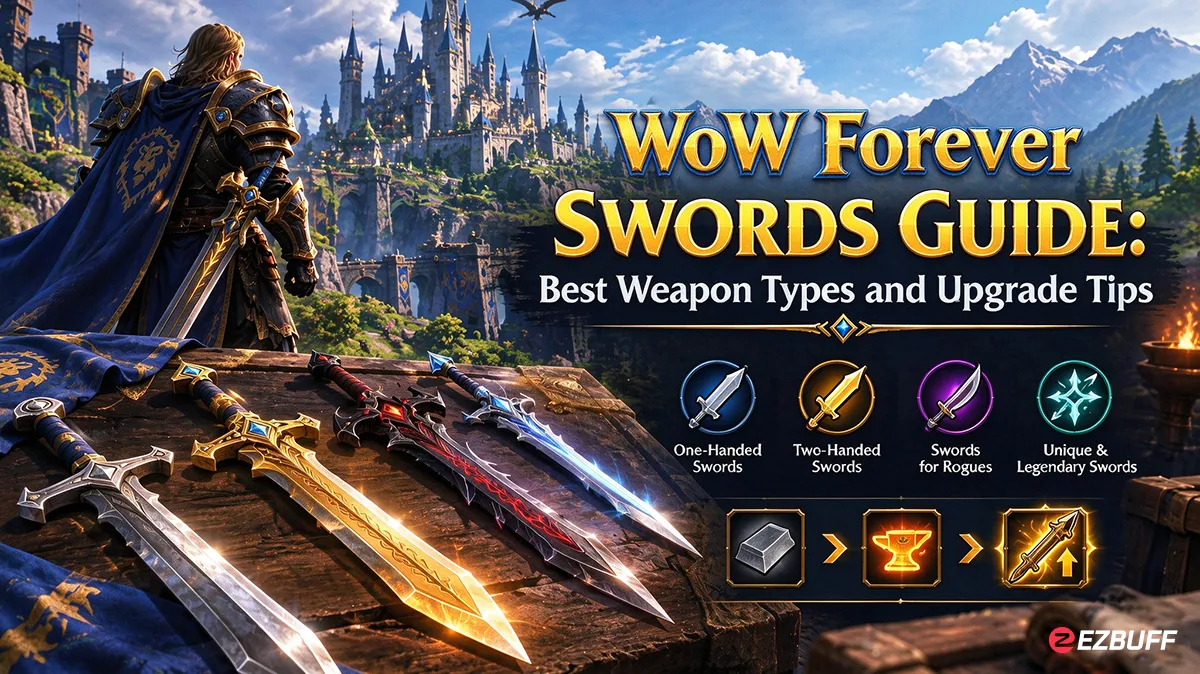
Swords are a versatile weapon category in WoW Forever, offering practical options for melee damage dealers and certain spellcasting classes. However, choosing the right sword involves more than comparing its damage range. Your class, weapon proficiency, character level, combat role, and available equipment all affect whether a weapon is worth using.
This WoW Forever swords guide explains how to choose between one-handed and two-handed swords, how to train sword proficiency, which stats deserve attention, and how to manage your gold when upgrading your equipment.
1. One-Handed vs. Two-Handed Swords
The first step is understanding the difference between one-handed and two-handed swords. Both can be valuable, but they support different combat styles.
| Weapon Type | Main Advantages | Best Use Cases |
|---|---|---|
| One-handed sword | Flexible equipment options and compatibility with off-hand items or shields where permitted | Dual-wield builds, defensive setups, and adaptable loadouts |
| Two-handed sword | Concentrates weapon damage into a single weapon slot | Builds that benefit from heavy melee hits and two-handed weapon talents |
One-handed swords offer flexibility. Depending on your class and build, you may be able to pair one with a shield or another weapon. This makes them worth considering when survivability, attack speed, or a particular off-hand bonus matters.
Two-handed swords are worth comparing when your build emphasizes weapon damage, powerful melee attacks, or talents that specifically support two-handed weapons. A higher damage range alone does not guarantee better overall performance, so examine the complete weapon tooltip before replacing your current equipment.
2. Which Classes Can Use Swords?
Weapon proficiency is an important consideration before purchasing or farming a sword. In WoW Forever, weapon access depends on class restrictions and learned weapon skills.
Classes that can use swords include:
- Warrior: Can use one-handed and two-handed swords, making swords a flexible option for different melee builds.
- Paladin: Can use both one-handed and two-handed swords, allowing different offensive and defensive equipment setups.
- Hunter: Can use one-handed and two-handed swords, depending on the intended build.
- Rogue: Can use one-handed swords, making them an alternative to daggers and other compatible weapons.
- Mage: Can use one-handed swords as a weapon option.
- Warlock: Can also use one-handed swords, although weapon stats and spellcasting benefits should guide the final choice.
Other classes have different weapon restrictions, so check your class's available skills before spending gold on a sword. A weapon that looks valuable is not useful if your character cannot equip it.
3. How to Learn Sword Proficiency
Owning a sword and being able to use it effectively are two different things. If sword proficiency is not available to your character yet, visit an appropriate Weapon Master in a capital city.
For sword users, Stormwind and Undercity are useful places to investigate for one-handed sword training and related weapon skills. The available trainers depend on the weapon type and your character's faction.
Before making a trip, follow these steps:
- Check your character's weapon skills to determine whether sword proficiency is already unlocked.
- Identify a Weapon Master who teaches the sword skill you need.
- Confirm the training fee and any relevant level requirements.
- Learn the skill before committing to an expensive sword.
- Practice with your chosen weapon to improve its proficiency if your character's current skill is below its maximum.
Weapon skill matters because insufficient proficiency can reduce melee effectiveness. Training early can help you avoid spending gold on a weapon that performs poorly simply because your character is not ready to use it efficiently.
4. What Stats Should You Look for on a Sword?
The strongest sword is not necessarily the one with the highest listed damage. Its value depends on how its attributes complement your class and build.
Weapon Damage and Attack Speed
Compare the weapon's damage range and attack speed together. Slower weapons can deliver larger individual hits, while faster weapons may suit builds that benefit from frequent attacks or particular on-hit effects.
Consider how your talents, abilities, and rotation interact with the weapon before choosing an upgrade.
Strength and Attack Power
Strength and attack power are important considerations for many physical damage builds. A sword with useful offensive stats can outperform a weapon with a higher damage range but weaker overall attributes.
Warriors and Paladins should consider their specific build requirements when evaluating these bonuses.
Hit, Critical Strike, and Expertise
Combat stats can make a meaningful difference once your character begins pursuing stronger equipment.
WoW Forever combines melee, ranged, and spell hit into a shared Hit stat and combines critical strike chances into a shared Crit stat. Some equipment also offers Expertise, which reduces the chance that attacks will be dodged or parried.
These changes make it important to evaluate the complete item rather than relying exclusively on its weapon damage. Check the current in-game tooltip because item attributes and balance details may differ from older Classic-era references.
Special Effects
Some swords may provide additional effects that suit particular encounters or builds. Damage procs, bonuses against specific enemy types, and other conditional effects can change how useful a weapon is in practice.
When comparing two swords, consider how often you can benefit from these effects rather than assuming every listed bonus has equal value.
5. How to Find and Upgrade Swords Efficiently
Finding a suitable sword is easier when you combine several acquisition methods instead of relying on a single farming route.
Complete Quests
Quest rewards can provide useful weapons during leveling. Review available rewards carefully, especially when a quest offers a weapon that directly improves your current equipment.
A suitable quest reward can save gold that would otherwise be spent replacing an outdated sword.
Explore Dungeons
Dungeon bosses and other encounters are potential sources of weapon upgrades. Before entering a dungeon, research its available loot and determine whether the weapons suit your class.
If several upgrades are available, prioritize the encounters that offer equipment relevant to your build. This helps reduce wasted time and makes group runs more productive.
Compare Auction House Listings
The Auction House can be convenient when you need an upgrade immediately. Compare prices across several listings and evaluate each weapon's attributes before making a purchase.
Do not pay a premium simply because a sword has a higher item level. A less expensive weapon with better offensive stats or a more useful effect may provide greater value.
Recheck Your Gear Regularly
As your character levels up, older weapons eventually become less effective. Review your equipment after completing major quest chains, unlocking new dungeons, or reaching a new stage of progression.
Avoid replacing a functional sword after every small improvement. Save your gold for upgrades that make a noticeable difference to combat performance.
6. Gold Management for Sword Collectors
Gold is important for weapon training, equipment upgrades, repairs, consumables, and other character expenses. A practical budget helps you avoid running out of money when a worthwhile sword becomes available.
Use these principles to manage your WoW Forever Gold more effectively:
- Set an upgrade budget: Decide how much gold you can spend without affecting essential expenses.
- Compare total value: Consider damage, attributes, special effects, and compatibility with your build.
- Keep a reserve: Avoid spending all your gold on one weapon when repairs and other progression costs remain.
- Sell unused equipment: Check whether old weapons and other unwanted items can generate useful income.
- Prioritize meaningful upgrades: Replace a sword when the improvement justifies its cost, not simply because another item is available.
Players who want to speed up equipment progression may also research options to Buy WoW Forever Gold. Before using any third-party service, check the game's current rules, account-security risks, and the provider's terms. Never share your account password or sensitive login information.
EZBUFF is one option players may encounter while researching game-related services. Evaluate any purchase carefully, confirm the product and server details, and make sure the transaction complies with the game's applicable policies.
7. Common Sword-Selection Mistakes
Avoid these mistakes when choosing your next weapon:
- Ignoring class restrictions: Verify that your class can use the sword before buying it.
- Forgetting weapon training: Check proficiency requirements instead of assuming every weapon skill is already unlocked.
- Comparing damage alone: Include attack speed, attributes, and useful special effects in your evaluation.
- Overspending while leveling: Keep your budget flexible because leveling equipment often needs replacing.
- Following outdated item recommendations: WoW Forever has its own item and balance changes, so verify weapon information against current in-game tooltips.
Final Advice
Choosing a sword in WoW Forever is about matching the weapon to your class, build, and current stage of progression. One-handed swords provide flexibility, while two-handed swords can suit builds focused on concentrated melee damage. Weapon proficiency, item attributes, and total acquisition cost should all influence your decision.
By researching quest rewards, checking dungeon loot, comparing Auction House listings, and managing WoW Forever Gold carefully, you can upgrade your equipment without wasting valuable resources. Whether you farm every weapon yourself or explore options to Buy WoW Forever Gold, prioritize reliable information and upgrades that genuinely improve your character.
