


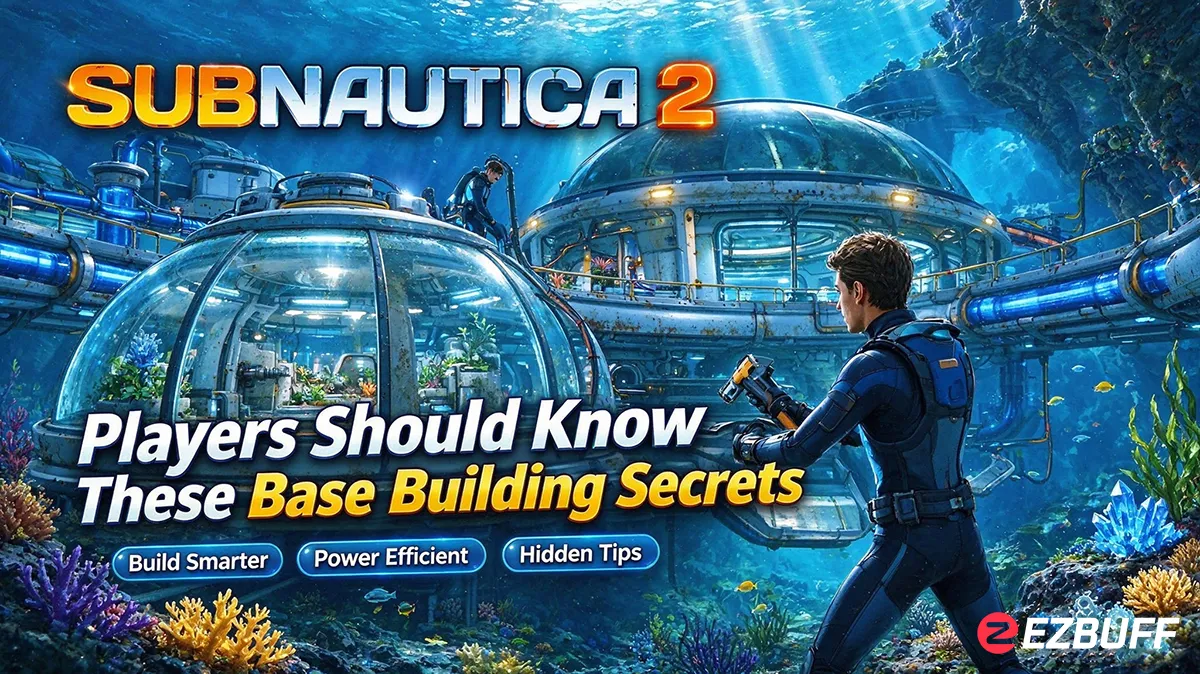
Building an underwater base in Subnautica 2 is one of the most important steps toward surviving the dangerous oceans of Proteus. A well-planned habitat gives players more than a safe place to recover oxygen. It also provides space for crafting, resource storage, power generation, and future vehicle operations.
However, building a functional base requires more planning than simply placing a few corridors and rooms. Every component has a specific purpose, and spending Titanium, Quartz, and other materials without considering future expansion can slow down progression.
The Habitat Builder's Standard Elements category provides the structural foundation for these projects. Here is what players need to know about its essential components, crafting costs, and the smartest ways to approach underwater construction.
1. Standard Elements: Every Building Component Explained
Standard Elements determine the basic shape and layout of an underwater habitat. From narrow corridors to larger rooms and vehicle facilities, these structures give players considerable freedom when designing a base.
One particularly useful feature is the Grow/Shrink system. Corridors and rooms can be expanded in four directions, allowing players to create larger spaces or multi-level structures without relying entirely on separate prefabricated compartments.
The following table summarizes the main Standard Elements and their listed crafting requirements.
| Component | Crafting Requirements | Main Purpose |
|---|---|---|
| Corridor | 2 Titanium | Creates connecting passages |
| Room | 5 Titanium | Provides space for larger facilities |
| Hatch | 1 Titanium + 1 Quartz | Creates an entrance |
| Window | 1 Glass | Adds visibility to habitat walls |
| Nook | 3 Titanium + 2 Glass | Provides a specialized structural section |
| Half Round Room | 5 Titanium + 5 Glass | Adds an alternative room configuration |
| Moonpool | 5 Titanium | Supports vehicle access and docking |
These components serve different construction needs. Corridors are useful for connecting sections, while Rooms provide the space required by larger equipment.
Windows are worth considering when planning the layout, but players should balance visibility against material consumption. Glass is also needed for other important facilities, so using it everywhere can create unnecessary resource pressure.
2. Divisional Elements: Build a More Organized Habitat
Once the main structure is complete, Divisional Elements help players organize the interior.
Instead of leaving the entire habitat as one continuous space, players can create separate sections for crafting, storage, and other activities.
| Component | Crafting Requirements | Function |
|---|---|---|
| Interior Wall | 2 Titanium | Separates interior areas |
| Interior Arch | 1 Titanium | Creates an open passage |
| Interior Door | 3 Titanium + 1 Glass + 1 Copper Wire | Provides an enclosed passage |
| Ladder | 2 Titanium | Connects different floors |
The most important consideration here is functionality.
Interior Walls can divide a large room into more manageable sections, while Interior Arches maintain easier movement between connected areas. Interior Doors provide another option when players prefer enclosed passages.
Ladders are particularly useful for vertical expansion. Instead of continuously extending the base across the seabed, players can stack rooms and create additional floors.
A good strategy is to establish the main layout first and add interior divisions after deciding where equipment and storage should go.
3. Unlock the Habitat Builder Before Expanding
Before constructing any underwater habitat, players need the Habitat Builder.
This tool is the central construction interface, providing access to Standard Elements, Interior Facilities, Exterior Facilities, Utility, and Furniture & Decor.
To obtain it, players need to scan two Habitat Builder fragments found through exploration. Once the blueprint is unlocked, the tool can be crafted using the Fabricator.
| Habitat Builder Material | Required Amount |
|---|---|
| Titanium | 2 |
| Glass | 1 |
| Basic Battery | 1 |
| Copper Wire | 1 |
The Habitat Builder also includes several useful construction functions:
- Build Mode: Select and place available structures.
- Deconstruct Mode: Remove unwanted structures and recover their construction materials.
- Move Mode: Relocate existing structures when adjusting the layout.
These functions make experimentation less punishing. Players do not necessarily need to commit to their first design permanently, since unwanted construction can be dismantled or moved.
4. Moonpool and Vehicle Facilities: Prepare for Deeper Exploration
A base becomes significantly more useful when it supports underwater vehicle operations.
The Moonpool provides a dedicated vehicle access point, while additional facilities support the construction and maintenance of the Tadpole submarine.
| Vehicle Facility | Crafting Requirements | Purpose |
|---|---|---|
| Moonpool | 5 Titanium | Vehicle access and docking |
| Tadpole Dock | 2 Titanium Ingots + 1 Silver Ingot + 2 Copper Wire | Supports Tadpole docking |
| Vehicle Fabricator | 2 Titanium Ingots + 1 Copper Ingot + 2 Glass | Constructs vehicles |
These structures should be treated as part of a larger infrastructure plan rather than isolated additions.
Before constructing a Moonpool, consider the available underwater clearance and how the structure will connect to the rest of the habitat. Leaving enough room for future expansion can prevent unnecessary rebuilding.
Players should also prioritize collecting Copper and Silver before committing to vehicle-related construction, since these materials are required for additional facilities.
5. How to Build an Efficient First Base
One of the biggest mistakes beginners make is building too much before establishing the essential survival infrastructure.
A large habitat might look impressive, but it can quickly consume resources that would be more useful for crafting equipment and supporting exploration.
A more practical approach is to build in stages.
| Construction Stage | Priority | Why It Matters |
|---|---|---|
| 1. Basic Structure | Corridor and Hatch | Establishes a functional habitat |
| 2. Power Generation | Solar Panel | Supplies electricity |
| 3. Essential Equipment | Fabricator and storage | Supports crafting and resource management |
| 4. Habitat Expansion | Room | Provides additional equipment space |
| 5. Interior Organization | Walls, Doors and Ladders | Improves movement and layout |
| 6. Vehicle Infrastructure | Moonpool and related facilities | Prepares for submarine exploration |
Power deserves particular attention. A powered habitat can replenish oxygen, but insufficient electricity can shut down essential systems.
Solar Panels are a useful early option because they require relatively accessible materials. However, their output depends on sunlight, making them less effective at night and in deeper areas.
As the base grows, players should consider more suitable long-term power sources, such as Hydroelectric Turbines or Thermal Plants, depending on their location.
6. Resource Management: Avoid Wasting Valuable Materials
Construction efficiency depends heavily on knowing which resources are needed next.
Titanium is the most important structural material because it appears in numerous building recipes. Quartz is also valuable for Hatches and Glass production, while Copper becomes increasingly important for wiring and electrical equipment.
Here is a practical collection priority:
| Resource | Important Uses | Priority |
|---|---|---|
| Titanium | Corridors, Rooms, Walls and Ladders | High |
| Quartz | Hatches and Glass | High |
| Copper | Copper Wire and electrical facilities | High |
| Silver | Vehicle-related infrastructure | Medium |
| Glass | Windows and specialized structures | Medium |
A useful habit is to pin important crafting recipes and collect materials according to your next construction objective.
Players researching Subnautica 2 Items should also pay attention to the difference between raw resources and processed materials. Titanium Ingots, Copper Wire, and Glass require additional crafting steps, so their total resource requirements should be considered before starting larger projects.
For players exploring external gaming item services, Buy Subnautica 2 Items is another search worth approaching carefully. Always verify current availability, compatibility, and game progression requirements before relying on third-party offerings. EZBUFF can be considered as part of broader gaming item research, but understanding the in-game crafting system remains essential.
7. Advanced Building Tips Every Player Should Know
Once the basic habitat is operational, a few additional strategies can make construction considerably more efficient.
Choose Your Location Carefully
Look for relatively flat terrain with accessible resources and suitable power-generation opportunities. Avoid heavily obstructed areas and locations with dangerous hostile creatures whenever possible.
Plan Your Base Around Equipment
Larger facilities require appropriate floor space. Reserve suitable rooms for important equipment instead of filling every available area with decorative structures.
Think Vertically
Stacking rooms can reduce unnecessary horizontal expansion. Plan ladder placement before filling the habitat with equipment.
Keep Storage Organized
Separate materials into dedicated storage containers. This makes it easier to track construction resources and prepare for future upgrades.
Take Advantage of Deconstruction
If a structure no longer fits your design, consider dismantling or relocating it rather than building an entirely new habitat elsewhere.
8. Final Building Priorities: What Should Players Focus On?
The most effective underwater base is not necessarily the largest one. It is the habitat that supports the player's current needs while leaving enough room for future development.
Beginners should prioritize a functional structure, reliable power, crafting facilities, and organized storage. As exploration progresses, larger rooms, interior divisions, and vehicle infrastructure become increasingly valuable.
Standard Elements provide the foundation for all these improvements. Understanding their crafting requirements and construction functions helps players make better decisions, avoid unnecessary material costs, and spend more time exploring the underwater world.
Whether you are establishing your first shelter or preparing a larger vehicle-supporting habitat, careful planning will make every stage of base construction more rewarding.