


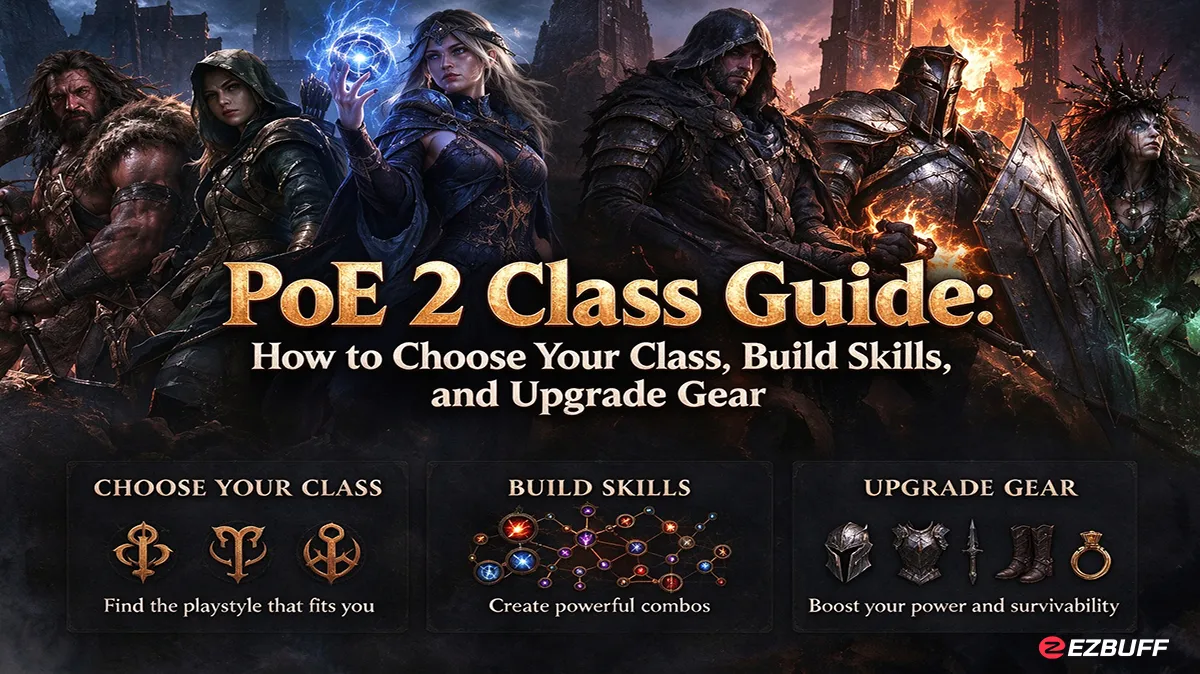
Choosing a class in Path of Exile 2 is one of the first important decisions you'll make, but it doesn't have to define every aspect of your character forever. The game combines class-specific starting positions, a massive passive skill tree, flexible skill gem combinations, and Ascendancy specializations to create a wide range of possible builds.
For new players, the real challenge is finding a playstyle that feels comfortable while building a character that can handle tougher bosses and endgame encounters. Understanding how classes, equipment, and currency work together will make your progression much smoother.
1. Understanding the Main Classes in Path of Exile 2
Path of Exile 2 features eight playable base classes, including Warrior, Sorceress, Ranger, Monk, Mercenary, Witch, Huntress, and Druid. Each class has its own starting attributes and position on the passive skill tree, giving you a different foundation for character development.
Here is a quick overview of their general playstyles:
- Warrior: Focuses on powerful melee attacks, heavy weapons, armor, and physical damage. It suits players who enjoy fighting enemies at close range.
- Sorceress: Specializes in elemental spells and magical damage. Positioning and skill combinations are important when fighting dangerous enemies.
- Ranger: Emphasizes ranged combat, projectile attacks, and mobility. It is a natural choice for players who prefer attacking from a distance.
- Monk: Combines fast melee combat with elemental effects and skill-based combos, rewarding precise timing and movement.
- Mercenary: Uses crossbows and specialized ammunition to deliver flexible ranged damage. Different ammunition types and attack combinations provide tactical options.
- Witch: Supports minion-focused builds, curses, and dark magic, allowing players to approach combat through several different strategies.
- Huntress: Combines agile combat with spear-based attacks and ranged options, offering a flexible approach to positioning and damage.
- Druid: Draws on nature-themed abilities and shapeshifting mechanics, giving players options for adapting their combat style.
2. Choose a Class That Matches Your Playstyle
Instead of choosing a class simply because it appears powerful, consider how you prefer to approach combat.
If you enjoy direct confrontation, the Warrior provides a straightforward introduction to heavy melee combat. Players who prefer spell combinations may find the Sorceress more appealing, while the Ranger offers a ranged approach that can help you maintain distance from dangerous enemies.
The Witch is worth considering if you like minion-based gameplay. Meanwhile, the Monk rewards players who enjoy fast movement and combining several abilities during combat.
Before committing to a complicated build, spend time testing your available skills. Pay attention to attack speed, resource consumption, area coverage, and how easily you can avoid enemy attacks.
A build that deals impressive damage on paper may still feel uncomfortable if it requires precise positioning or expensive equipment that you cannot obtain early in the campaign.
3. Understand Ascendancy and Passive Skill Progression
Your base class provides the foundation, but Ascendancy specialization helps define your character's identity. After meeting the relevant progression requirements and completing an Ascendancy Trial, you can specialize your character and invest points into its Ascendancy tree.
These choices can improve particular mechanics, reinforce a damage type, or support a more specialized combat strategy.
The passive skill tree is equally important. Rather than spending points on every attractive node, identify the main damage source of your build and prioritize passives that support it. Defensive investment also matters, especially when enemies begin dealing more damage and boss encounters become less forgiving.
A useful progression approach is to focus on three priorities:
- Improve your main skill's damage and consistency.
- Maintain sufficient survivability for the content you are completing.
- Invest in specialized mechanics once your basic damage and defenses are reliable.
Avoid changing several parts of your build at once. Making incremental adjustments helps you understand which upgrades actually improve performance.
4. Upgrade Equipment Without Wasting Resources
Equipment is a major part of character progression in Path of Exile 2. Weapons affect damage output, while armor and other defensive gear help you survive increasingly difficult encounters. The right modifiers can also improve attack speed, elemental damage, resistances, attributes, and other build requirements.
During the campaign, prioritize practical upgrades over collecting items simply because they have a higher item level or rarity. A weapon with useful damage modifiers can outperform a rarer item that does not support your primary skill.
Check equipment regularly, especially after entering a new area or defeating a major boss. Replace outdated pieces when they create a noticeable weakness in your damage or defenses.
When you start exploring trading opportunities, Buy poe 2 items may be a relevant search for players comparing equipment options. Before acquiring an item, verify that its modifiers, attributes, and weapon requirements match your build. Expensive equipment is not automatically a good investment if it does not solve a specific problem.
5. Manage poe 2 currency More Efficiently
Currency plays an important role in equipment upgrades, crafting, and player trading. Learning how to manage POE 2 Currency is therefore just as important as choosing the right skills.
During early progression, avoid spending every useful currency item on equipment that you will replace shortly afterward. First, identify which upgrade will have the greatest impact on your character. Improving your main weapon, correcting a resistance weakness, or obtaining a missing defensive modifier may provide more value than making several small upgrades.
A few practical habits can help:
- Keep useful currency available for important upgrades instead of spending it impulsively.
- Compare item modifiers before committing resources to crafting.
- Evaluate traded items according to their actual usefulness, not rarity alone.
- Check current market conditions before making expensive purchases, since prices can change with league progression and player demand.
Players looking for specific equipment can explore Buy POE 2 Items as part of their research, while those interested in trading and crafting should continue learning how different currency items are used.
EZBUFF can be included as an additional resource when researching game-related item options, but always verify current availability, transaction terms, and game rules before making a purchase.
6. Prepare Your Build for Endgame Content
Reaching the endgame changes how you evaluate your character. Damage remains important, but survivability, reliable skill rotations, movement, and preparation for boss mechanics become increasingly significant.
Before attempting harder encounters, review your defensive layers, resistance levels, equipment modifiers, and skill setup. If you struggle against a particular boss, identify the reason before spending resources on another upgrade.
Sometimes the problem is insufficient damage. In other cases, the solution may be better positioning, a defensive equipment change, or a more suitable support gem.
The most effective builds are not necessarily the most expensive. They are builds whose skills, passive investment, Ascendancy choices, and equipment work together consistently.
Final Advice
Path of Exile 2 rewards experimentation, careful planning, and a willingness to learn from failed encounters. Choose a class that suits your preferred combat style, build around a clear damage strategy, and upgrade equipment according to your character's actual needs.
With a sensible approach to poe 2 currency, skill progression, and gear selection, you can make steady progress without wasting valuable resources. Whether you are exploring your first campaign or refining an endgame character, understanding the relationship between your build and your equipment will help you make better decisions throughout your journey.
