


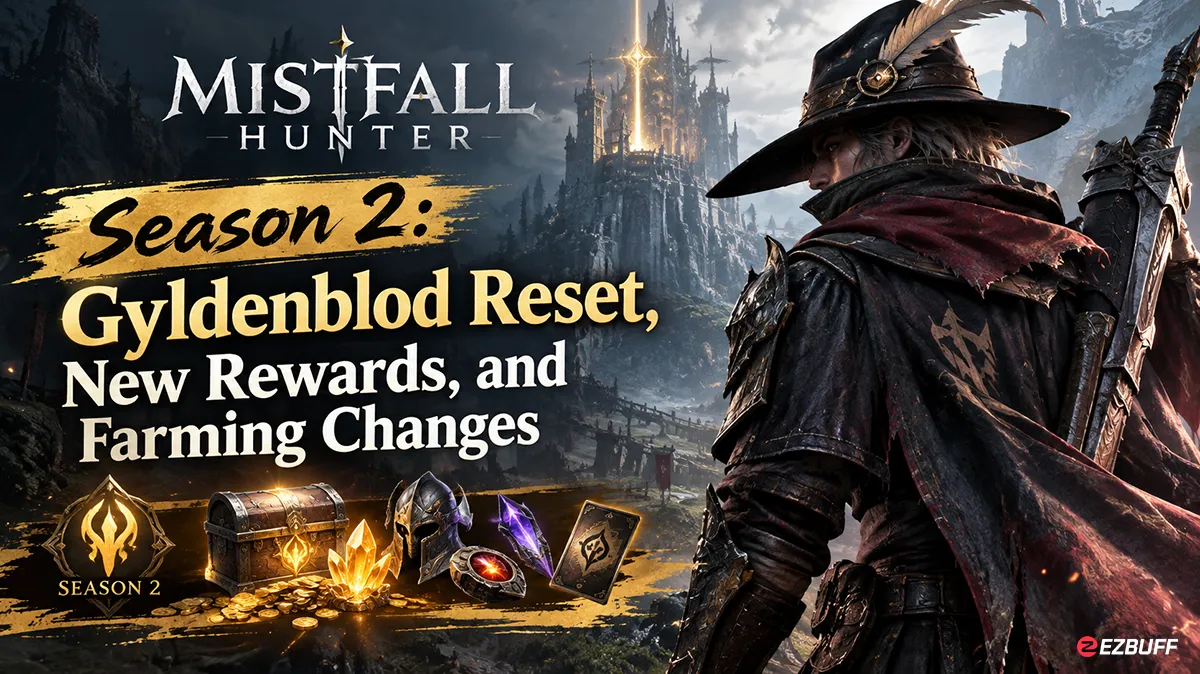
Mistfall Hunter Season 2 is shaping up to be an important update for players focused on equipment progression, camp development, and resource farming. With the first season approaching its end, the developers have outlined a partial reset system, new seasonal rewards, improvements to loot drops, and changes designed to reduce repetitive grinding.
For players managing their remaining resources, understanding how Gyldenblod is converted, which assets carry over, and how the new Fateweaver Shop works will be essential. These changes could influence how players prepare for the next season and decide where to invest their time before the transition.
Mistfall Hunter Season 2: What Players Need to Know
The announced Season 2 plans focus on improving progression without completely removing the value of first-season achievements. Character development, selected currencies, cosmetic items, and several account progression systems will remain intact, while certain resources and inventory items will be converted into seasonal contribution rewards.
The main announced changes include:
- A partial seasonal reset with contribution-based returns.
- The Fateweaver Shop and its Gyldenblod Leaves exchange system.
- The Blood and Fire pre-season event.
- Planned improvements to loot containers and valuable item drop rates.
- A new seasonal gameplay mode with a dedicated reward shop.
- Camp progression improvements and additional inventory conveniences.
- Further combat balance adjustments for repeated class compositions in three-player teams.
Not every planned feature is confirmed for the first day of Season 2. Players should check official announcements for implementation dates and final gameplay details.
How the Mistfall Hunter Gyldenblod Reset Works
Gyldenblod is one of the resources affected by the Season 1 transition. According to the published reset rules, eligible Gyldenblod holdings will be converted into contribution value rather than simply carried over unchanged.
That contribution value will then be converted into Gyldenblod Leaves, a seasonal exchange resource used in the Fateweaver Shop. This means players should evaluate their remaining assets based on the upcoming conversion system instead of assuming that every item or currency will retain its original form.
The reset also affects other resources, including Echoes of Fate, Soul Cocoons, and eligible items stored in backpacks and warehouses. Camp building levels will reset for six specified buildings, although certain previously consumed rare upgrade materials will not need to be paid again when those buildings are upgraded.
Before the season ends, players should review the in-game Season Reset page to understand which resources qualify for conversion and how their holdings will be handled.
Fateweaver Shop: What Can Gyldenblod Leaves Buy?
The Fateweaver Shop is one of the most important parts of the seasonal transition because it gives players a way to turn previous progression into useful rewards.
The officially announced reward categories include:
- Pip's Rare Pouches.
- Unbound Holy Collectibles Selection Chests.
- Holy Soulcatch Nets.
- Combat Bags.
- The Mistchaser's Messenger Bug Jar commemorative cosmetic.
- The Proof of the Soul Hunt commemorative medal.
The conversion system uses diminishing rates across different contribution tiers. As holdings enter higher tiers, additional assets receive progressively lower conversion rates. This approach is intended to reduce the gap between players with different levels of accumulated resources while still recognizing previous progression.
For players researching Mistfall Hunter Gyldenblod, the important distinction is between the original currency and the new seasonal exchange resource. Gyldenblod contributes to the reset calculation, while Gyldenblod Leaves are used for the new shop's redemption system.
Exact conversion thresholds and individual shop prices should be checked in-game rather than assumed from general season announcements.
Season 2 Loot Changes: More Containers and Better Drop Opportunities
Loot progression is another major focus of the planned update. The developers have acknowledged that the first season's loot experience could feel restrictive, particularly when repeated encounters failed to produce useful equipment.
Season 2 plans to address this through two primary changes.
First, more loot containers are expected to appear across maps, giving players additional opportunities to search for equipment and resources during exploration. Second, the probability of obtaining valuable items from containers and monster drops is planned to increase.
These changes could make regular expeditions more rewarding and reduce the time needed to assemble functional equipment. However, the developers have not published a complete table of drop rates or confirmed a universal percentage increase.
Players should therefore avoid planning their entire farming strategy around unverified claims about specific drop chances. Actual results will depend on the final implementation and the rewards available in each activity.
New Seasonal Mode and Reduced Grinding
The developers have also outlined a new seasonal gameplay mode accompanied by a dedicated exchange shop. The goal is to reduce the amount of repetitive farming required to obtain seasonal rewards.
This is particularly relevant for players who found the first season's Soul Harvest progression too time-consuming. A more focused reward loop could make it easier to work toward specific items instead of relying entirely on repeated runs with uncertain outcomes.
The full mode name, entry requirements, reward list, and exchange rates have not yet been completely disclosed. Players should wait for the detailed announcement before assuming that the existing Soul Harvest system will be removed or replaced entirely.
Camp Upgrades, Crafting, and Inventory Improvements
Season 2 also includes planned improvements to resource management and equipment progression.
Six camp buildings are scheduled to reset: Goddess Statue, Gylden Pool, Tavern, Workshop, Scavenger Squad, and Soulcatch Tree. Their previous levels will contribute to the seasonal return system, helping players rebuild without losing all the value of their earlier investment.
Additional planned improvements include a shard exchange system for important camp materials, better crafting value, further Combat Bag adjustments, a dedicated gem storage area, and an option to unequip all gems at once.
These changes could make the progression loop more manageable, especially for players who regularly switch equipment or maintain several builds. However, the implementation schedule may vary across the season.
Blood and Fire: The Season 2 Pre-Season Event
The Blood and Fire event launched with the October 21 update and is intended to run until the end of Season 1.
Players can follow the Bard's story, complete event objectives, and earn Moonlight Nectar alongside an exclusive earring cosmetic. The update also introduced the Season Reset and Fateweaver Shop interfaces, allowing players to review the transition rules and seasonal exchange system.
Because the event is tied to the end of the first season, players should complete its available objectives before the transition. The October 21 announcement did not establish a precise Season 1 end date, so the in-game event timer and subsequent official notices remain the best sources for the deadline.
How to Prepare Your Resources Before Season 2
A sensible preparation plan starts with checking the reset rules rather than rushing to liquidate every asset.
- Review the Season Reset interface. Confirm which currencies and inventory items are eligible for contribution conversion.
- Check unfinished rewards. Review available contract rewards, event objectives, and unclaimed seasonal items.
- Evaluate camp progression. Remember that selected building levels reset, while certain previously consumed upgrade materials do not need to be spent again.
- Track your Path of Glory standing. Your final first-season ranking will influence your starting position in the next season.
- Complete Blood and Fire objectives. Claim the event's available rewards before the season ends.
- Wait for confirmed exchange details. Use the official shop information to decide how to prioritize Gyldenblod-related assets.
Players who want to compare resource acquisition options can also research the available ways to obtain Gyldenblod and assess whether their remaining playtime is better spent on progression, equipment farming, or seasonal objectives. If considering an external service, review its terms, delivery conditions, and account-security implications before making a decision.
Should You Prioritize Gyldenblod Before Season 2?
The answer depends on your current progression and how much time remains before the reset. Players with unfinished camp upgrades or seasonal objectives should first determine whether completing those activities provides more value than continuing to accumulate resources that will be converted.
The upcoming Fateweaver Shop also changes how players should evaluate their holdings. Since the reset converts eligible assets into contribution value and then into Gyldenblod Leaves, the final outcome depends on the published conversion tiers rather than a simple one-to-one transfer of the original currency.
For players comparing progression options, searches such as Buy Mistfall Hunter Gyldenblod may help them research available resource services, while understanding the in-game reset system remains the more important step in making an informed decision. Any purchasing decision should account for the game's rules, service reliability, and account safety.
Final Thoughts
Mistfall Hunter Season 2 aims to improve the game's progression loop through a partial reset, the Fateweaver Shop, planned loot improvements, and a new seasonal mode designed to reduce repetitive farming. The Gyldenblod conversion system is especially important because it connects first-season resource management with the next season's reward economy.
For now, the best preparation is to review the official reset interface, finish available Blood and Fire objectives, and keep track of the remaining announcements. With exact drop rates, exchange thresholds, and several implementation dates still awaiting confirmation, a flexible plan based on verified information is more reliable than committing to an unconfirmed farming strategy.
