


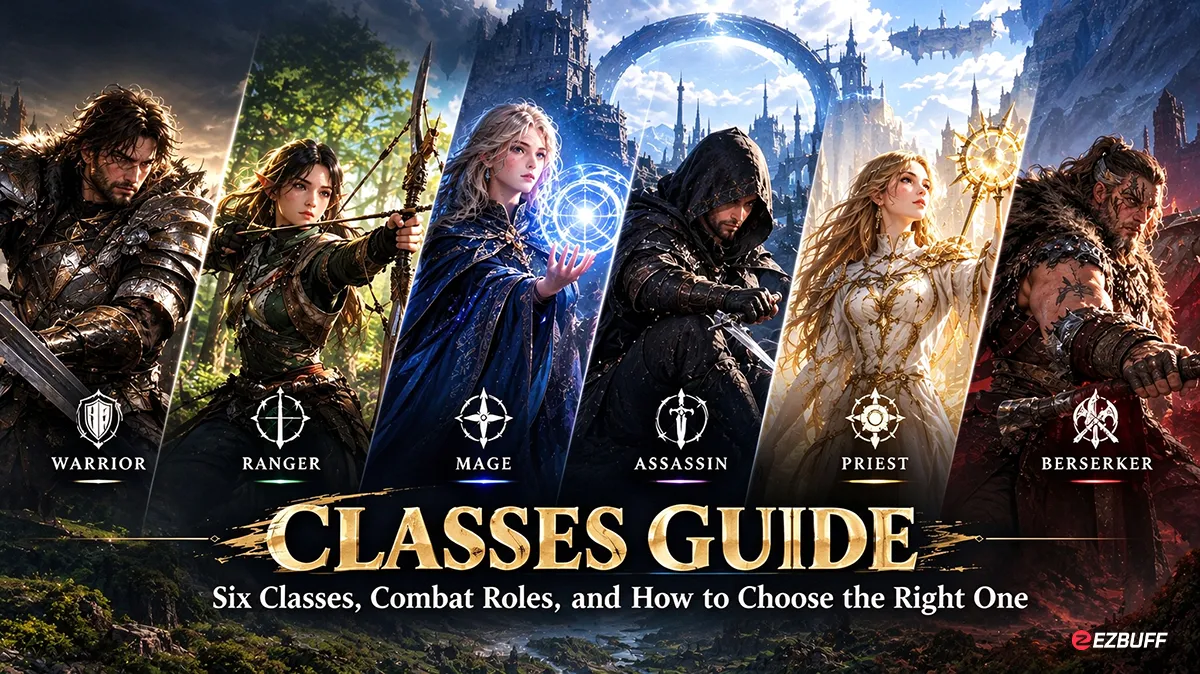
Chrono Odyssey offers players several distinct combat styles through its early-revealed lineup of six classes: Swordsman, Ranger, Sorcerer, Berserker, Paladin, and Assassin. Each class is designed to appeal to different player preferences, ranging from balanced melee combat and ranged attacks to magical abilities, frontline defense, and high-speed burst damage.
For players preparing to explore this action MMORPG, understanding the differences between these classes is an important first step. While the game's class designs and individual skills may continue to evolve during development, the early lineup provides a useful reference for deciding which combat style best matches your preferences.
Chrono Odyssey: All Six Classes and Their Combat Roles
The six announced classes cover several familiar MMORPG combat archetypes. However, choosing a class should involve more than simply looking at its damage potential. Combat range, mobility, defensive options, and preferred playstyle can all influence how comfortable a character feels during extended encounters.
| Class | Main Combat Role | Recommended Playstyle |
|---|---|---|
| Swordsman | Balanced melee offense and defense | Adaptable frontline combat |
| Ranger | Ranged attacks and mobility | Distance management and positioning |
| Sorcerer | Magical damage and control | Skill combinations and spellcasting |
| Berserker | Powerful close-range attacks | Aggressive offensive pressure |
| Paladin | Defense and team support | Frontline protection and cooperation |
| Assassin | Fast attacks and burst damage | Precision, mobility, and timing |
These descriptions reflect the early class concepts rather than a definitive ranking. Final performance will depend on the game's combat systems, skill adjustments, equipment options, and encounter design.
Swordsman: A Balanced Choice for Direct Combat
The Swordsman is a natural option for players who enjoy fighting enemies at close range while maintaining a balance between offense and defense. Its general role makes it a useful class to investigate for newcomers who want to learn the fundamentals of action MMORPG combat.
Players considering the Swordsman may appreciate a straightforward approach to engaging enemies, responding to incoming attacks, and adjusting their offensive pressure as encounters develop. This style can also appeal to experienced players who prefer flexibility over specializing entirely in ranged damage or high-risk burst attacks.
Although the Swordsman appears approachable as a starting point, its actual difficulty will depend on the final skill set and combat mechanics.
Ranger: Ranged Damage and Tactical Positioning
The Ranger is designed for players who prefer attacking from a distance rather than remaining in the middle of close-range exchanges. Mobility and positioning are central to this archetype, making battlefield awareness an important part of its potential playstyle.
Ranger players should consider how they manage distance, identify safe attacking opportunities, and reposition when enemies approach. This style may suit players who enjoy observing enemy movements before committing to an attack.
However, ranged combat does not automatically mean easier gameplay. If encounters require frequent movement or careful distance management, players will still need to make quick decisions to maintain their effectiveness.
Sorcerer: Spellcasting, Magical Damage, and Control
For players who prefer magic-based combat, Sorcerer offers a different approach to dealing with enemies. Its early concept emphasizes magical damage and control, making it appealing to those who enjoy combining abilities rather than relying primarily on physical attacks.
The class may attract players who like planning skill sequences and adapting their abilities to changing combat situations. Crowd control can also be an important consideration when evaluating how a magic-focused character contributes to encounters.
Before choosing Sorcerer, players should look for further official information about its resource requirements, casting mechanics, defensive options, and available skills. These details will help determine whether its combat rhythm matches their preferences.
Berserker: Aggressive Melee Pressure
Berserker is aimed at players who prefer powerful close-range attacks and an aggressive approach to combat. Rather than prioritizing distance, this archetype emphasizes applying pressure directly to enemies.
Players drawn to the Berserker may enjoy fast-paced encounters in which maintaining offensive momentum is a priority. This style can feel rewarding for those who prefer direct confrontation and want their character to focus on melee damage.
Nevertheless, an aggressive role does not necessarily mean that every encounter should be approached without caution. The class's final defensive mechanics, attack commitment, and ability to respond to enemy actions will determine how much risk its playstyle involves.
Paladin: Frontline Defense and Team Cooperation
The Paladin is the class to consider for players who value group coordination and defensive responsibilities. Its early role emphasizes protection and support, distinguishing it from classes primarily associated with damage output.
In team encounters, a defense-oriented character can be valuable when players need to coordinate their actions and respond to dangerous situations. Paladin may therefore appeal to those who enjoy contributing to a group's stability rather than focusing exclusively on personal damage.
Players should wait for additional details about its defensive abilities, support skills, and group utility before assuming it will follow a specific tanking or healing system. Those mechanics have a direct impact on how the class performs in cooperative content.
Assassin: Fast Attacks and High-Precision Combat
Assassin is designed for players who enjoy speed, mobility, and burst damage. Its combat identity is centered on striking quickly and taking advantage of suitable opportunities to attack.
Compared with a more balanced melee archetype, Assassin may appeal to players who prefer a faster and more execution-focused experience. Recognizing openings, timing attacks, and reacting efficiently can all be important considerations for this type of character.
This style may be less comfortable for players who prefer a slower, more forgiving approach. However, those who enjoy precise inputs and high-tempo combat may find Assassin worth watching as more gameplay details emerge.
Which Chrono Odyssey Class Should Beginners Choose?
There is no universally correct choice for every new player. Instead, beginners should start by identifying the combat experience they want.
- Choose Swordsman if you prefer direct melee combat and a balanced approach to offense and defense.
- Consider Ranger if you enjoy ranged attacks, movement, and controlling your distance from enemies.
- Explore Sorcerer if magical abilities, skill combinations, and control mechanics interest you.
- Try Berserker if you favor aggressive melee pressure and powerful close-range attacks.
- Consider Paladin if cooperation, protection, and frontline responsibilities appeal to you.
- Look into Assassin if you enjoy fast attacks, precise timing, and burst damage.
Newcomers should also consider how much mechanical complexity they want to manage. A class that looks powerful in a short gameplay clip may not necessarily be the most enjoyable choice over dozens of hours. Personal comfort with attack timing, positioning, and defensive decisions is often more important than chasing a perceived strongest class before reliable balance information is available.
Class Choice, Character Progression, and Preparation
Selecting a class is only the beginning of character progression in Chrono Odyssey. As additional information becomes available, players should pay attention to skill development, equipment progression, combat balance, and the way different classes perform in solo and group encounters.
Players researching the game's economy may also encounter searches for Buy Chrono Odyssey Gold as they investigate ways to prepare for future progression. Before using any third-party service, check the game's official rules, trading restrictions, and account-security guidance. Availability and permitted trading methods should never be assumed without confirmation.
EZBUFF is one resource name players may encounter while researching gaming-related services, but class selection should remain the priority when deciding how to approach the game.
Ultimately, the best class is the one that matches your preferred way of fighting. Whether you favor the Swordsman's flexibility, the Ranger's positioning, the Sorcerer's magic, the Berserker's aggression, the Paladin's support role, or the Assassin's speed, understanding these early class identities can help you make a more informed decision as Chrono Odyssey continues to develop.
