


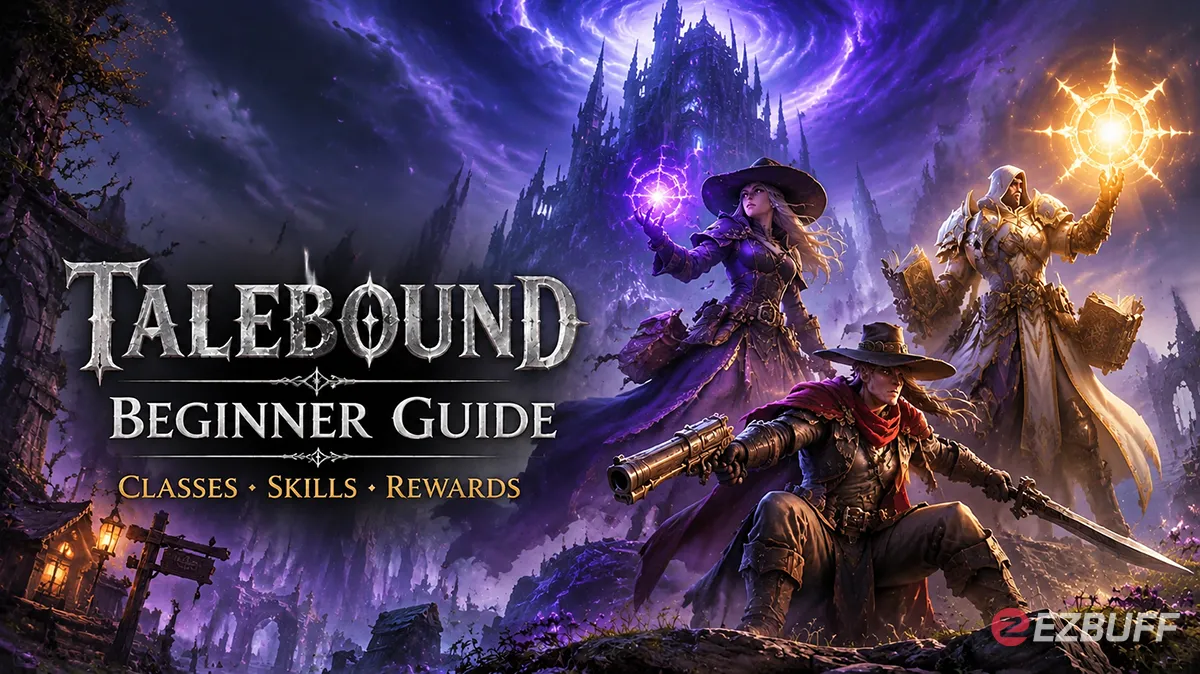
World of Warcraft is introducing Talebound, a new PvE action RPG game mode arriving with the Echoes of the Worldcore content update on December 1. Players can explore dark fantasy stories, fight dangerous enemies, defeat bosses, solve puzzles, and collect rewards while developing a hero through a dedicated talent and progression system.
Whether you prefer spellcasting, fast melee combat, or holy damage, Talebound offers three distinct archetypes: Witch, Slayer, and Inquisitor. Understanding their abilities, combat mechanics, and progression systems in Quillgrave will help new players prepare for their first adventure.
What Is Talebound in WoW?
Talebound is a standalone PvE action RPG experience that allows players to adventure alone or with friends. Unlike traditional World of Warcraft gameplay, this mode emphasizes active movement, dodging, positioning, skill combinations, and encounters against different enemies and bosses.
The adventure begins in Red Hollow, where players encounter a mysterious Storyteller and enter the world of his dark tales. After completing the introduction, players reach Quillgrave, a village that serves as their main preparation hub between adventures.
Talebound features four stories:
- Darkhaven: A settlement associated with Konrad von Sonnesheim, the Lord Marshal, and Alexandre Dozsenc, the Blood Bishop.
- Greenthistle Wood: A dangerous forest inhabited by witches, a giant, and hostile creatures.
- Greywake's Expedition: An unsettling expedition involving Zzyg'th, the Hadal Tyrant, and Chathoa, the Herald from Beyond.
- Grove of the Night Court: A dark fantasy story featuring Tilywth, the Fairy Queen, and Maernok, the Nightmare King.
Each story features its own setting, enemies, and boss encounters. Players can explore these adventures across Normal, Veteran, and Heroic difficulties.
Talebound Classes: Witch, Slayer, or Inquisitor?
Talebound features three playable classes: Witch, Slayer, and Inquisitor. Each class has a unique set of abilities and a distinct combat style. Whether you prefer spellcasting, physical attacks, or holy and fire-based powers, understanding each class's skills can help you choose the right hero for your adventures.
Witch: Spellcasting and Summoned Creatures
The Witch uses lightning, poison, spiders, moonlight, thorns, and ravens to overwhelm enemies. Her abilities combine spellcasting with summoned creatures, giving players several ways to deal damage and control encounters.
The Witch's seven abilities include:
- Brewing Storm: Performs a sequence of three attacks that inflict lightning damage. The final strike deals significantly more damage.
- Thorn: Launches thorns that erupt beneath the two nearest enemies, allowing the Witch to attack multiple targets.
- Moonlight Ravens: Channels a spell while moving to summon a flock of ravens. Each raven seeks out nearby enemies and deals damage.
- Bubbling Cauldron: Summons a group of frogs that leap toward random enemies and explode, dealing poison damage in a small area.
- Winter Spiders: Summons spiders that move forward toward enemies. A brood mother among them explodes, dealing heavy damage in a small area.
- Feline Communion: Blinks forward and transforms the Witch into a cat for a short time. While transformed, a shower of stars damages nearby enemies, and Crooked Path allows her to blink forward through moonlight.
- Coven: Summons a group of witches to attack enemies. When the Witch hits targets with Bubbling Cauldron, Winter Spiders, or Moonlight Ravens, the Coven follows up with similar spells.
Players who enjoy magical attacks, poison damage, and summoned creatures may find the Witch an appealing choice.
Slayer: Fast Melee and Ranged Attacks
The Slayer combines sword attacks, firearms, and explosive abilities to fight dangerous enemies. His skill set offers a mix of direct damage, mobility, and temporary defensive effects, making him a versatile choice for players who enjoy switching between melee and ranged combat.
The Slayer's seven abilities include:
- Slash: Performs three melee attacks against enemies in front of the Slayer, with increased damage and a stun on the final strike.
- Throwing Knives: Moves the Slayer forward quickly while damaging nearby enemies. It can also cancel other attacks to enable faster movement.
- Shrapnel Round: Fires multiple rounds that bounce between enemies and damage each target they hit.
- Explosive Shot: Fires a shotgun blast at enemies in front of the Slayer. Closer targets can take damage from multiple shots.
- Minefield: Allows the Slayer to leap backward and throw mines that damage and slow enemies.
- Silver Bolt: Launches the Slayer into the air and fires silver bolts at an enemy with the highest health in range, providing temporary immunity while airborne.
- Dense Macabre: Transforms the Slayer into a flurry of blades and shadows, dealing heavy damage while gaining temporary immunity.
Players who prefer a combination of melee attacks, firearms, explosive damage, and quick movement may enjoy the Slayer.
Inquisitor: Holy and Fire-Based Abilities
The Inquisitor uses holy and fire-based powers to punish enemies. His abilities include direct attacks, area damage, and skills that can be used while moving, offering different ways to handle groups of enemies and stronger targets.
The Inquisitor's seven abilities include:
- Purify: Performs a sequence of three attacks against enemies in front of the Inquisitor. Each strike deals more damage than the previous one.
- Radiance: Can be cast while moving to launch fire at a nearby target. The projectile explodes on impact and burns surrounding enemies.
- Light's Wrath: Summons a wrathful sun above an enemy, burning nearby enemies.
- Rapture: Surrounds enemies with damaging flames for a short time. The flames can be detonated when the Inquisitor chooses.
- Condemn: Damages enemies in front of the Inquisitor with holy energy and reduces their movement speed. This ability can also be cast while moving.
- Exorcism: Targets the enemy with the highest health in front of the Inquisitor. Holding the ability for longer increases its damage, but the Inquisitor must remain stationary while channeling it.
- Divine Punishment: Channels an attack against the nearest enemy while granting temporary immunity to damage. When the effect ends, the Inquisitor leaps toward the targeted enemy and damages surrounding enemies.
Players who enjoy holy attacks, fire damage, and abilities that combine offense with temporary protection may prefer the Inquisitor.
Each class has its own talent tree with 27 points. Players can spend Tales of Valor at the Scribe in Quillgrave to unlock additional abilities and upgrade their talents as they progress through Talebound.
Talebound Skills and Character Progression
Talebound progression is built around unlocking abilities and improving your chosen class through its talent tree. Each class has a separate talent tree with 27 points, giving players room to develop their Witch, Slayer, or Inquisitor over time.
To unlock additional abilities and upgrade talents, players spend Tales of Valor at the Scribe in Quillgrave. This makes the Scribe an important stop between adventures, especially when you want to expand your available skills or strengthen abilities you already use.
For beginners, it is worth understanding the difference between unlocking and upgrading. Unlocking gives your character access to additional abilities, while talent upgrades improve the abilities available to your chosen class. Rather than spending resources without a clear plan, review your available options and consider which abilities best support the way you approach combat.
Talebound also places importance on movement and defense. Every class can double jump, dodge, use Evade for temporary immunity, Sprint, and Guard. Learning when to reposition, avoid incoming attacks, and defend yourself is an important part of surviving encounters.
As you complete more adventures, revisit the Scribe and review your progression options. Your talent choices should support your preferred combat approach rather than simply focusing on unlocking as many abilities as possible.
Quillgrave NPCs: Where to Upgrade Your Hero
Quillgrave is more than a place to return to after completing a story. Its four main NPCs provide different progression options that help players prepare for their next adventure.
- Arcanist: Provides potions, draughts, and flasks found throughout the tales.
- Scribe: Manages talents and abilities, allowing players to unlock and upgrade their skills.
- Antiquarian: Provides passive bonuses that influence how players approach each story.
- Outfitter: Improves starting health, damage, energy, and focus.
Returning to the village between adventures gives players an opportunity to review their upgrades, replenish supplies, and prepare for the next encounter.
Rather than immediately entering another story, beginners should take time to understand these NPC services and make use of the available progression options.
Talebound Rewards: Bound Silver and Ducats
Talebound introduces two important currencies with different purposes.
Bound Silver is used to purchase cosmetic rewards, including transmog sets, individual appearance pieces, and other collectibles. The Talebound store can be accessed from the character selection screen, the Game Menu, or by visiting Nib in Quillgrave.
Ducats serve a different purpose. Players can convert them into resources needed for Talebound progression.
Players can earn Bound Silver through quests, achievements, and progression in Tales of the Storyteller. Completing stories also provides Bound Silver and other rewards for their efforts.
If your main goal is collecting cosmetics, pay attention to the available quests and achievements. If you want to develop your Talebound hero, understand how Ducats contribute to the resources needed for further progression.
Keeping these two currencies separate will make it easier to understand which activities support character development and which contribute to your cosmetic collection.
WoW Gold and Talebound: Understanding Different Currencies
Although Talebound introduces its own progression and reward currencies, players should not confuse them with regular WoW Gold.
Bound Silver is used for cosmetic purchases, while Ducats can be converted into resources needed for Talebound progression. Regular WoW Gold remains part of the wider World of Warcraft economy, supporting activities such as trading, crafting materials, and other character-related expenses.
Players who also participate in regular WoW activities may want to plan their gold spending separately from their Talebound progression. For those managing their in-game resources, Buy WoW Forever Gold is another relevant topic to explore when preparing for regular WoW activities.
Understanding the difference between these currencies helps players avoid confusing cosmetic purchases, Talebound upgrades, and everyday MMO expenses.
How to Start Talebound: A Beginner's First Run
Getting started in Talebound is straightforward, but beginners should take time to understand the progression system before entering more challenging stories.
Follow these steps to prepare for your first adventure:
1. Open Talebound and Create Your Hero
Access the Talebound game mode through the World of Warcraft menu. Create your hero and choose one of the three available archetypes: Witch, Slayer, or Inquisitor.
2. Complete the Red Hollow Introduction
Follow the introductory story to meet the Storyteller and enter the world of Talebound. This introduction leads you toward Quillgrave, the main village between adventures.
3. Explore Quillgrave
Before starting your first story, become familiar with the four NPCs. Visit the Arcanist for consumables, the Scribe for talents, the Antiquarian for passive bonuses, and the Outfitter for improvements to your starting attributes.
4. Choose a Story and Difficulty
Select one of the available stories and choose a difficulty that matches your experience. Talebound offers Normal, Veteran, and Heroic difficulties.
5. Review Your Progression Between Runs
After completing a story, return to Quillgrave. Review your available upgrades, collect your rewards, replenish supplies, and consider which talents will help with your next adventure.
For beginners, learning how to move, dodge, Evade, and Guard is just as important as unlocking offensive abilities. Experiment with different skills as you progress instead of assuming that one setup will work equally well in every encounter.
Prepare for Your Next Talebound Adventure
Talebound rewards players who understand their chosen archetype, make smart talent upgrades, and adapt their combat approach to different encounters. Start with the introductory story, explore Quillgrave, and gradually develop your skills before taking on higher difficulties.
As players explore the four stories, class abilities, progression choices, and reward strategies will become important topics for further guides. Keep following EZBUFF for practical World of Warcraft tips and updates to help you make the most of every adventure.