


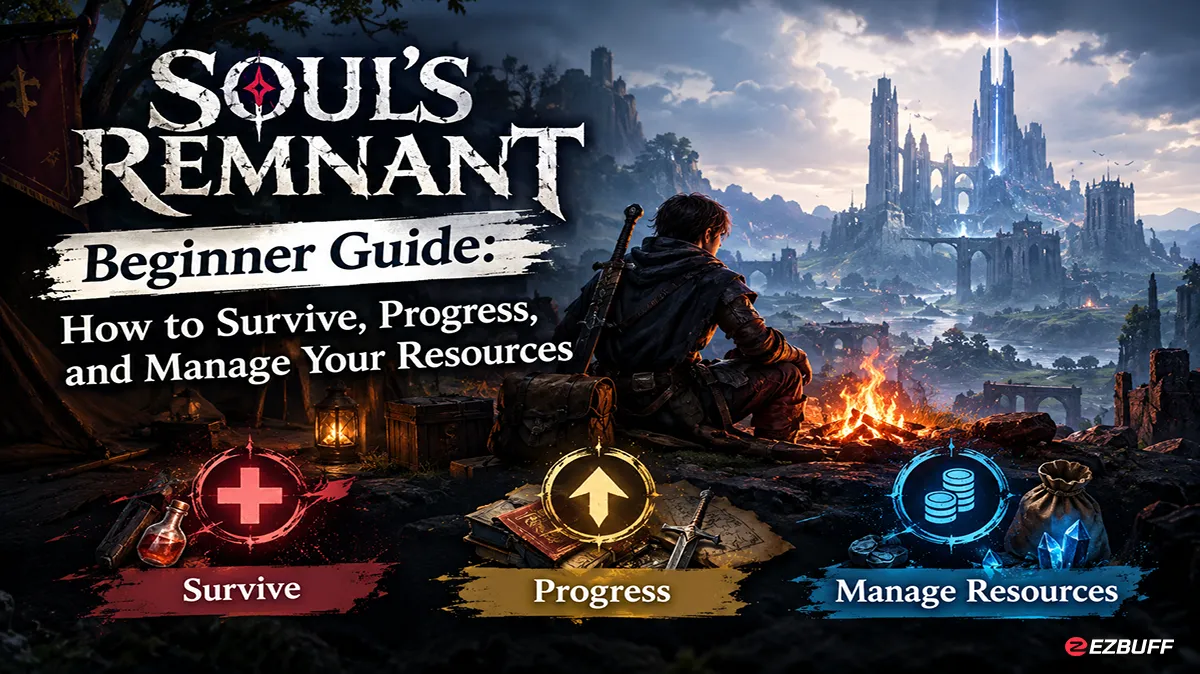
Starting a new character in Soul's Remnant can feel a little overwhelming. The game combines exploration, combat, gathering, crafting, dungeons, social systems, and an open-world progression structure, so there is plenty to learn beyond simply fighting monsters. The good news is that the early game becomes much easier once you understand a few important systems.
This beginner guide covers the key things new players should know, from leaving the starting area and managing Soul Crystal to staying alive, organizing your inventory, and making better use of parties and campfires.
Complete the Early Questline First
When you first appear at Spawn, your best move is to speak with the Quest Master near the Great Campfire. Accepting the available leveling questline gives you a straightforward way to gain early experience while learning the basic mechanics.
Your next important objective is finding the Shepherd in Outskirts Northwest. The Shepherd provides a quest that requires you to reach Level 10. Once you reach that level, you can return to the Shepherd and receive a Normal Dungeon Pass along with a quest to clear Slime Garden Normal.
Slime Garden can be accessed through the sign in Outskirts Northwest. Completing the dungeon and returning to the Shepherd allows you to leave the starting area and properly begin exploring the wider world.
For new players, following this progression is much more efficient than wandering around randomly. You will gain levels while gradually becoming familiar with the game's combat and exploration systems.
Learn How the World Map Search Works
Soul's Remnant gives players a useful search function through the World Map. Press M to open the map, then use the search box in the upper-right corner.
You can search for a specific monster or gathering material. The map interface will show which locations contain your target, making it much easier to plan grinding or gathering routes.
This feature becomes increasingly valuable as your character develops. Instead of manually checking every area, you can search for the resource or enemy you need and immediately narrow down the possible locations.
Keep Return Crystals Available
One of the most useful early-game items is the Return Crystal. A Return Crystal costs 400 Soul Crystal from the Shop Keeper at Spawn and can also be crafted through Alchemy.
Using one creates a temporary portal that allows players nearby to return directly to the center of Spawn. The portal remains available for roughly one minute.
There is an important economic advantage here: using a Return Crystal costs 100 Soul Crystal less than warping back to Spawn. It also works in many overworld locations where normal travel can be inconvenient.
If you're planning a long exploration trip, keeping at least one Return Crystal in your Use tab is a smart habit. This is one situation where having enough resources to Buy Soul's Remnant Soul Crystal can make your early exploration much more comfortable, especially when you don't want to waste time traveling back manually.
Be Careful With Death and EXP Loss
Death has a real cost in Soul's Remnant. When your HP reaches zero, your character is returned to Spawn and you lose 8% of the EXP required for your current level.
That makes unnecessary deaths particularly frustrating when you're close to leveling up.
Rather than focusing entirely on damage, beginners should invest some attention into survivability. Putting some stat points into CON can increase your health pool and provide additional defense. Even a small investment can make a noticeable difference during early exploration.
Potions and food are also worth carrying. Stronger healing items become available as you progress, while food can provide instant healing and temporary buffs.
Use Campfires Before Difficult Hunts
Campfires are another simple but extremely useful survival tool. They provide light and improve HP and MP recovery for players standing nearby.
You cannot place campfires everywhere, including dungeons and underwater areas, but they are particularly useful when hunting enemies that are above your current level.
If you're preparing for a difficult farming session, placing a campfire before starting can reduce downtime between fights and give your party a convenient recovery point.
Join Parties Whenever Possible
Soul's Remnant is designed around social interaction, so don't hesitate to party with other players.
Party members receive bonus EXP from monster kills, and monsters killed by your teammates can also count toward relevant quests. You can find nearby players through the Players on Map menu and send them a party invitation.
Parties become even more important for dungeons, minigames, party quests, and the Abyss Trial. Dungeons, for example, use randomly generated rooms filled with monster waves before eventually leading players toward a boss encounter.
The Abyss Trial is particularly challenging and includes checkpoints as well as weekly rewards, making coordinated party play a useful way to tackle difficult content.
Manage Your Inventory Before It Becomes a Problem
Inventory management is easy to overlook during the first few hours, but it quickly becomes important.
The Magic Storage Chest at Spawn provides 100 additional storage slots, with stacks of up to 500 items. Its contents are shared across your characters and can also be used automatically for crafting at Spawn.
Your normal inventory starts with four tabs containing 28 slots each, while individual item stacks can normally reach 99.
As you progress, additional storage options become available:
- Small Bag: 10,000 Soul Crystal and adds 7 inventory slots.
- Backpack: 150,000 Soul Crystal and adds 14 inventory slots.
- Void Bag: 1,500,000 Soul Crystal and adds 21 inventory slots after completing the relevant questline.
Don't immediately sell everything you don't recognize. The storage system gives you plenty of room to keep materials for future crafting and progression.
Learn the Inventory Shortcuts
Several inventory tools can save you time.
The Lock function prevents selected items from being sold or altered. The Disassembly function lets you preview what you'll receive from breaking down unwanted equipment. The Sorting button quickly organizes your current inventory tab.
You can also Ctrl + left-click an item to link it in chat, allowing other players to inspect its information.
Another useful feature is the ability to save different equipment, stats, and skill setups. This becomes increasingly useful once your character starts experimenting with different builds or gameplay roles.
Useful Controls Every Beginner Should Know
A few shortcuts are worth remembering from the beginning:
- F9 toggles the entire UI.
- Backslash toggles the Hotbars display.
- Ctrl + F4 toggles fullscreen.
- Ctrl + F3 displays FPS and ping information.
- M opens the World Map.
- I opens Inventory.
- O opens Stats.
- K opens Skills.
- P opens Party.
- N opens Guild.
Final Tips for New Players
The biggest mistake beginners can make in Soul's Remnant is trying to rush through everything. The game is built around exploration and player interaction, so learning the systems gradually is more rewarding than simply chasing levels.
Follow the early questline, reach Level 10, clear Slime Garden, and then start exploring beyond the Outskirts. Keep Return Crystals available, carry healing supplies, use campfires when appropriate, and party with nearby players whenever you are grinding.
Most importantly, manage your Soul Crystal carefully. Whether you're saving for inventory upgrades, useful items, or deciding when to Buy Soul's Remnant Soul Crystal, having a sensible resource plan will make progression much smoother.
For more game guides, builds, and practical MMO tips, keep an eye on EZBUFF as your next source for Soul's Remnant information.
