


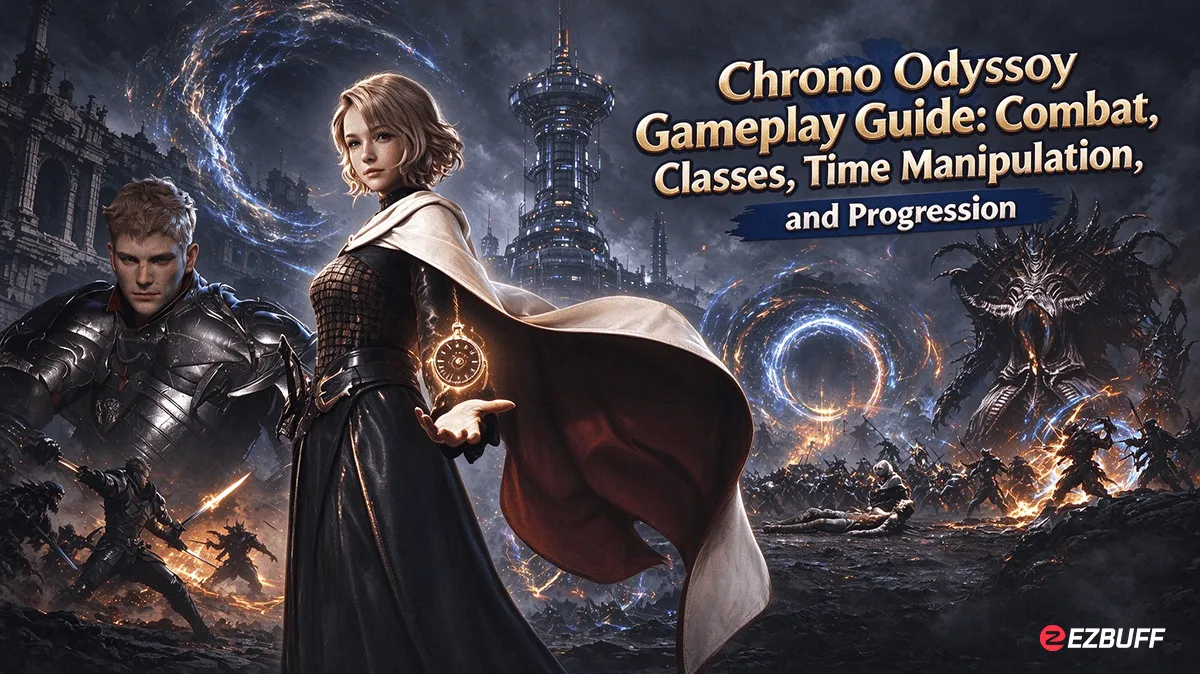
Chrono Odyssey is built around a simple idea that can completely change how an action MMORPG feels: time itself is part of your toolkit. Instead of relying on traditional tab-target combat, the game combines real-time attacks, dodging, defense, weapon switching, exploration, crafting, and time manipulation in a seamless open world.
For new players, understanding these systems early is more important than simply chasing higher gear. This gameplay guide breaks down the core mechanics and explains how to approach combat, exploration, character progression, and the in-game economy.
Understand the Action Combat First
Chrono Odyssey uses action-oriented combat rather than a traditional tab-target MMORPG system. Basic attacks, defensive actions, dodges, positioning, and weapon switching all matter during an encounter. Enemy attack patterns are also designed to require active reactions instead of simply standing in place and cycling through abilities.
The most important beginner habit is learning when not to attack.
Watch enemy animations, identify attack windows, dodge incoming damage, and then punish the opening. This approach becomes especially valuable against stronger enemies where blindly using skills can leave you vulnerable.
Weapon switching adds another layer to the system. Each class can use multiple weapon types, allowing players to adapt their combat style instead of being locked into one attack pattern.
Choose a Class That Matches Your Playstyle
Chrono Odyssey features six announced classes: Swordsman, Ranger, Sorcerer, Paladin, Berserker, and Assassin. Each class provides a different approach to combat and can be combined with weapon choices to create specialized playstyles.
A Swordsman is a natural starting point for players who want balanced melee combat. Paladin is better suited to players who enjoy defensive utility and group-oriented play, while Berserker focuses more heavily on aggressive melee pressure.
Ranger provides ranged combat, Sorcerer emphasizes magical abilities, and Assassin offers a more mobile and precision-focused approach.
Rather than selecting a class because it appears strongest on paper, think about the combat rhythm you enjoy. Since Chrono Odyssey emphasizes customization and weapon combinations, your preferred playstyle can have a major influence on how enjoyable progression feels.
Learn to Use the Chronotector
The Chronotector is the defining gameplay system in Chrono Odyssey. This artifact gives players access to time-based abilities that can affect combat and exploration. Players can manipulate time, stop enemies, rewind events, and interact with different versions of the world.
The key mistake beginners should avoid is treating these abilities as emergency buttons that are only useful against bosses.
Instead, think of time manipulation as another layer of your normal combat rotation.
A well-timed time-based ability can create an opening, interrupt dangerous situations, or give you an opportunity to reposition. The Chronotector can also connect gameplay with exploration by allowing players to experience different states of the world.
This makes learning the timing of these abilities just as important as learning your class skills.
Explore Setera Instead of Rushing Through Quests
Chrono Odyssey takes place in the seamless open world of Setera, which contains different environments and points of interest. The world is designed around exploration rather than simply moving from one quest marker to another.
Players can encounter different biomes, environmental events, NPCs, resources, and combat opportunities while traveling.
A good progression routine is to combine questing with exploration. When moving between objectives, collect useful resources and investigate nearby locations instead of immediately teleporting or ignoring everything outside the main path.
This approach can also help you build up materials for crafting and future equipment upgrades.
Make Gathering and Crafting Part of Your Progression
The game's economy includes activities such as harvesting, logging, mining, and skinning. These resources can be used to produce equipment and consumables, giving gathering a meaningful role alongside combat.
New players should avoid selling every resource they collect simply because they do not need it immediately.
Keep useful materials in storage and learn which resources are connected to equipment and consumable production. Over time, this can reduce the pressure to constantly purchase everything you need.
Players who understand the relationship between gathering, crafting, equipment, and the wider economy will have more options when improving their characters. This is also where learning how to manage gold becomes useful rather than simply spending currency whenever you see an upgrade.
Prepare for Dungeons and Group Content
Chrono Odyssey is designed to support cooperative content, including dungeons and raids. The game also features large-scale encounters where teamwork and coordination can become more important than individual damage output.
Before entering difficult group content, make sure your equipment is appropriate for the encounter and that you understand your class role.
Damage dealers should focus on positioning and avoiding unnecessary damage. Defensive characters need to understand enemy pressure and protect teammates, while utility-focused builds should learn when their abilities are most valuable.
Do not judge your build purely by its damage numbers. A character that survives mechanics and consistently contributes to a group can be much more useful than one that produces impressive numbers for a few seconds before being defeated.
Manage Your Gold Carefully
Gold will naturally become an important part of character progression as players acquire equipment, materials, and consumables. If you are planning how to Buy Chrono Odyssey Gold, it is still important to understand what your currency should actually be used for before committing resources.
Prioritize meaningful upgrades rather than constantly replacing equipment for small statistical improvements.
A sensible early-game economy focuses on essential gear, crafting materials, consumables, and progression-related expenses. Avoid spending heavily on items that will quickly become obsolete.
For players using an external service such as EZBUFF, always check the game's current rules and account-security requirements first. Currency management should complement your progression rather than replace learning the game's core systems.
A Simple Beginner Gameplay Routine
A practical early progression loop looks like this:
- Complete the main progression objectives to unlock core systems.
- Practice attack, defense, dodge, and weapon switching against normal enemies.
- Experiment with your class and identify a comfortable combat style.
- Learn how your Chronotector abilities interact with combat.
- Gather resources while exploring the open world.
- Craft or upgrade useful equipment instead of replacing everything constantly.
- Join group content once you understand your role.
- Save gold for meaningful progression instead of unnecessary purchases.
This approach keeps your character moving forward while also helping you learn the mechanics that make Chrono Odyssey different from traditional MMORPGs.
Final Gameplay Tips
The biggest advantage in Chrono Odyssey will not necessarily come from having the highest possible numbers. The game's action combat rewards awareness, positioning, timing, and adaptation.
Learn enemy patterns before trying to overpower them. Use weapon switching to cover weaknesses in your build. Treat the Chronotector as part of your regular combat toolkit, and explore Setera rather than treating the world as a collection of quest markers.
Most importantly, build your character around a combat style you actually enjoy. Chrono Odyssey's combination of classes, weapons, customization, time manipulation, crafting, and open-world activities gives players several ways to approach progression. Understanding how these systems connect will make the journey much smoother once you begin tackling harder content.
