


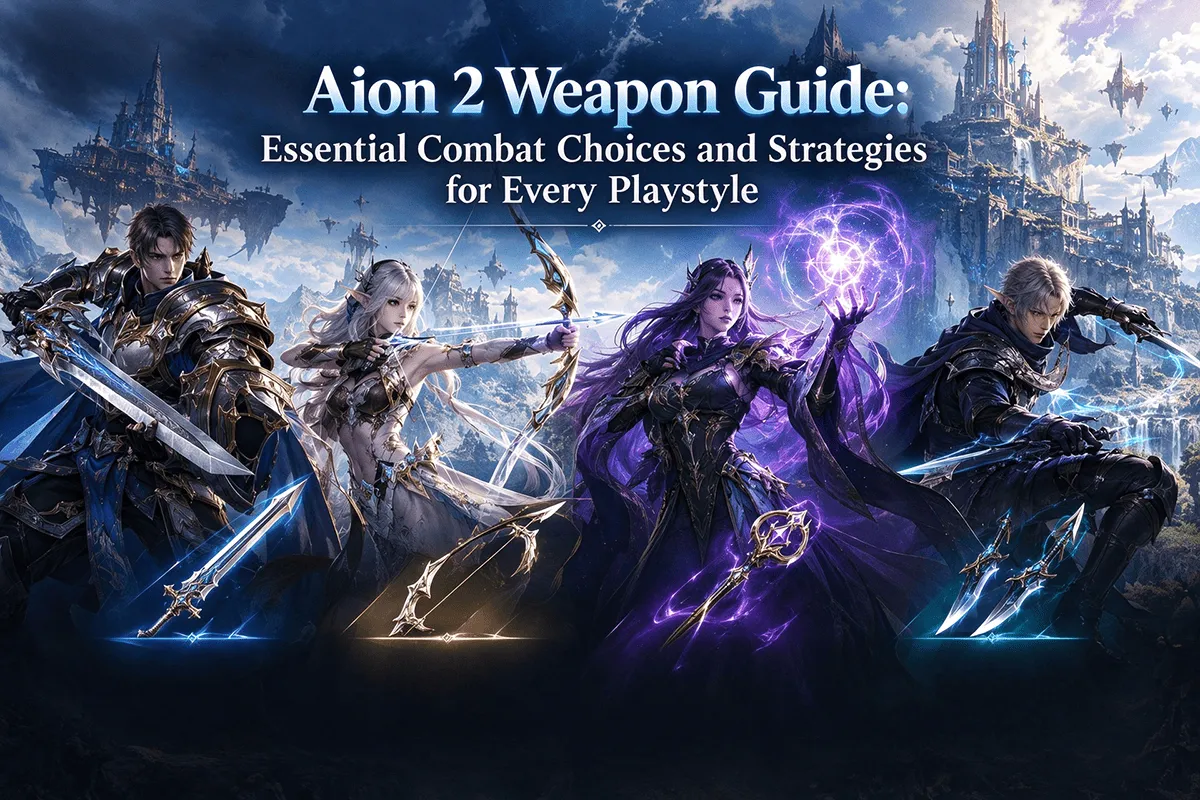
Choosing the right weapon in Aion 2 is about more than maximizing damage. Your weapon determines how you approach combat, manage enemy pressure, contribute to a party, and respond to opponents in PvP. With eight classes available in the global launch lineup, understanding each class's weapon and combat role can help players make better decisions before investing time and resources into character progression.
NC has built Aion 2 around a more action-oriented combat system, featuring manual controls and class-specific abilities. Each class has a distinct role, from frontline defense and close-range burst damage to ranged attacks, healing, and team support. These differences make weapon selection an important consideration for both newcomers and experienced MMORPG players.
1. Understand the Eight Classes and Their Weapons
Before committing to a combat style, players should understand how each class approaches encounters. The global launch lineup includes eight classes, each with a dedicated weapon and a distinct combat identity.
- Templar — Longsword and Shield: Designed for frontline defense, enemy control, and protecting teammates.
- Gladiator — Greatsword: Focuses on melee damage, wide-area attacks, and sustained combat.
- Assassin — Dual Daggers: Emphasizes mobility, precise attacks, and high burst damage.
- Ranger — Bow: Specializes in physical ranged damage and attacking enemies from a safer distance.
- Sorcerer — Spellbook: Uses powerful magic attacks and area damage to control encounters.
- Spiritmaster — Orb: Combines ranged damage with summoned spirits and crowd-control abilities.
- Cleric — Mace: Provides healing and support while retaining offensive capabilities.
- Chanter — Staff: Combines melee combat with buffs and additional support for the party.
These roles provide a useful starting point, but weapon choice should also reflect personal preferences. Players who enjoy leading dungeon groups may prefer a Templar, while those who want to focus on positioning and ranged attacks may find the Ranger more comfortable.
2. Choose Melee Weapons for Frontline Pressure and Close-Range Combat
Melee classes reward players who understand enemy attack patterns, positioning, and ability timing. However, not every melee weapon serves the same purpose.
The Templar's Longsword and Shield offer a defensive approach. Rather than chasing maximum damage, Templar players need to maintain enemy attention, recognize dangerous attacks, and use defensive abilities at the right moment. This role is particularly valuable in group dungeons, where a tank's decisions can influence the entire encounter.
The Gladiator takes a more aggressive approach. Its Greatsword supports powerful melee attacks and area damage, making it suitable for players who want to engage multiple enemies and maintain offensive pressure. Effective play requires balancing damage opportunities with the need to avoid unnecessary incoming attacks.
Assassins, meanwhile, rely on Dual Daggers and precise engagement timing. Their burst-oriented style favors players who can identify vulnerable targets, close the distance, and capitalize on short damage windows.
Combat tip: Melee players should learn when to commit and when to disengage. Using every offensive ability immediately can leave a character without useful options when an enemy begins a dangerous attack sequence.
3. Use Ranged Weapons to Improve Positioning and Damage Consistency
Ranged combat provides a different set of tactical advantages. Instead of relying on close-range exchanges, ranged classes must manage distance, identify safe attack windows, and avoid mechanics that interrupt their damage output.
The Ranger's Bow is suited to players who prefer direct physical attacks from a distance. Maintaining a suitable position can make ordinary encounters easier to manage, particularly when enemies have dangerous close-range attacks.
The Sorcerer offers a more ability-driven approach. Its magic damage and area attacks are useful when enemies gather together, but players must also consider the timing of their skills and the risks of remaining stationary during an enemy attack.
The Spiritmaster introduces another layer of decision-making through summoned spirits and crowd control. Players need to consider not only their own position but also how their summons and control abilities can influence the encounter.
Combat tip: Ranged damage is only valuable when players can continue attacking safely. Watch enemy movement, avoid unnecessary damage, and save important abilities for moments when their effects can make a meaningful difference.
4. Select Support Weapons for Better Group Performance
Damage numbers do not tell the whole story in Aion 2. In coordinated PvE content, defensive support, healing, and buffs can determine whether a group survives a difficult encounter.
The Cleric uses a Mace and focuses on healing and party support. Although the class has offensive capabilities, players who choose this role should learn to recognize incoming damage and prioritize teammates who need immediate assistance.
The Chanter uses a Staff and combines melee combat with support abilities. Its hybrid role can appeal to players who want to participate in combat while helping teammates through buffs and additional utility.
For both classes, situational awareness matters as much as equipment. A player who understands boss mechanics and anticipates incoming damage can often contribute more effectively than someone who focuses exclusively on personal damage output.
Players should also consider their preferred group responsibilities before investing heavily in equipment. A dedicated healer, a frontline tank, and a damage dealer have different priorities, even when they participate in the same dungeon.
5. Adjust Weapon Strategies for PvE and PvP
PvE and PvP place different demands on weapon selection and combat execution.
In PvE, players generally benefit from learning enemy attack patterns, managing defensive cooldowns, and using abilities efficiently across repeated encounters. Greatsword attacks can help Gladiators handle groups of enemies, while Templars can focus on controlling dangerous opponents. Rangers and Sorcerers should pay attention to positioning, and support classes need to maintain enough awareness to respond to changing party conditions.
PvP places greater emphasis on reading opponents and responding to unpredictable situations. Assassin players need to recognize opportunities to engage vulnerable targets, while ranged classes must manage distance and avoid being trapped in close combat. Templars and support classes can contribute by disrupting enemy pressure and helping teammates survive.
NC has also introduced class balance adjustments and separate PvP and PvE damage calculations in previous Aion 2 updates. This distinction reinforces the importance of evaluating a class in the content where it will actually be used, rather than assuming that performance in one mode automatically translates to another.
6. Manage Equipment Upgrades and Kinah Carefully
Selecting a suitable weapon is only the beginning. Players must also consider equipment upgrades, skill development, and the resources needed to maintain steady character progression.
A practical approach is to establish a clear upgrade priority before spending valuable currency. Focus on equipment that supports your main combat role, evaluate whether an upgrade addresses a genuine weakness, and avoid spending heavily on temporary gear that will soon be replaced.
Kinah management is part of this process. Players may need currency for equipment-related expenses and other progression needs, so maintaining a reserve can provide more flexibility when new opportunities appear.
For players researching the game's economy, the search phrase Buy Aion 2 Kinah may appear alongside discussions of currency and equipment progression. However, before purchasing currency through any third-party service, check the game's current terms of service and permitted transaction methods. Unauthorized transactions can carry account risks.
Resources such as EZBUFF can also serve as a starting point for researching gaming-related information and progression topics. Regardless of the resource used, players should compare options carefully and prioritize legitimate methods of acquiring currency and equipment.
7. Build a Combat Strategy Around Your Preferred Playstyle
There is no single weapon that suits every player or every encounter. Templars provide frontline defense, Gladiators specialize in aggressive melee combat, Assassins pursue burst damage, and Rangers offer physical ranged attacks. Sorcerers and Spiritmasters bring magical damage and control, while Clerics and Chanters support their teams through healing, buffs, and utility.
The most useful strategy is to choose a class that matches your preferred role, learn its core abilities, and invest in equipment that complements that role. Once you understand the basics, you can refine your approach for solo progression, dungeon groups, and PvP encounters.
As Aion 2 continues to develop, class balance and combat adjustments may change the relative value of particular abilities or builds. Players should therefore treat weapon recommendations as a starting point rather than a permanent ranking.
Ultimately, consistent performance comes from understanding your class, recognizing combat situations, and making informed decisions about equipment and resources. A weapon becomes truly effective when its strengths match the player's tactics.
